The Education Business Blog


Picking a target market is one of the most fundamental decisions a sales and marketing team makes. Your target market determines what products you build, where you promote them, and how you talk about them. Socratic Marketing in the budding conversation economy demands a rigorous approach to this question as part of your Big M Marketing approach..
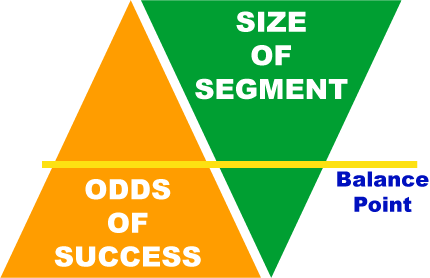 Picking a good target market is a balancing act. The smaller your market the higher your odds of success in targeting specific needs. However, that has to be weighed against the financial objectives of the business. You can’t get so small that you define yourself out of a job! Think of this as two forces that are inversely proportionate. Your goal is to find the right balance point.
So why do so many companies get this wrong? They define markets based on granfalloons, a concept coined by Kurt Vonnegut which means “a proud and meaningless association of human beings.” For example, have you seen segmentation schemes based on geography, district size, or % of free and reduced lunch students? If you are engaging in data driven selling and/or socratic marketing these are good starting points, but they are not the most powerful way to define a market.

 It was arresting in its simplicity and represented a validation of the products in the words of end users. It also showed that great marketing doesn’t have to cost a lot.
 The National Education Computing Conference
  1. What promise are you making to the market?
 It really is this simple – but simplicity is difficult for most companies. You must put the time in up front to get the promise nailed down and then you have to sustain your focus on it long enough for the market to believe you.